Out of sight, out of mind. This is how wastewater systems that vastly improve quality of life are often approached. Following your flush, wastewater takes a complex journey through intersecting pipes to ultimately reach a wastewater treatment plant. This underground infrastructure is vital to the health, safety, and comfort of our communities, and something that can often be taken for granted.
What is a Sewer?
By definition, sanitary sewers are a series of pipes that are engineered to carry wastewater to a plant for treatment. Sanitary sewers transport wastewater from homes, businesses, commercial developments, or wherever a sanitary sewer system is installed. Wastewater is conveyed through gravity sewers and manholes, or is pumped from a pump station through force mains.
Repair. Renew. Relax.
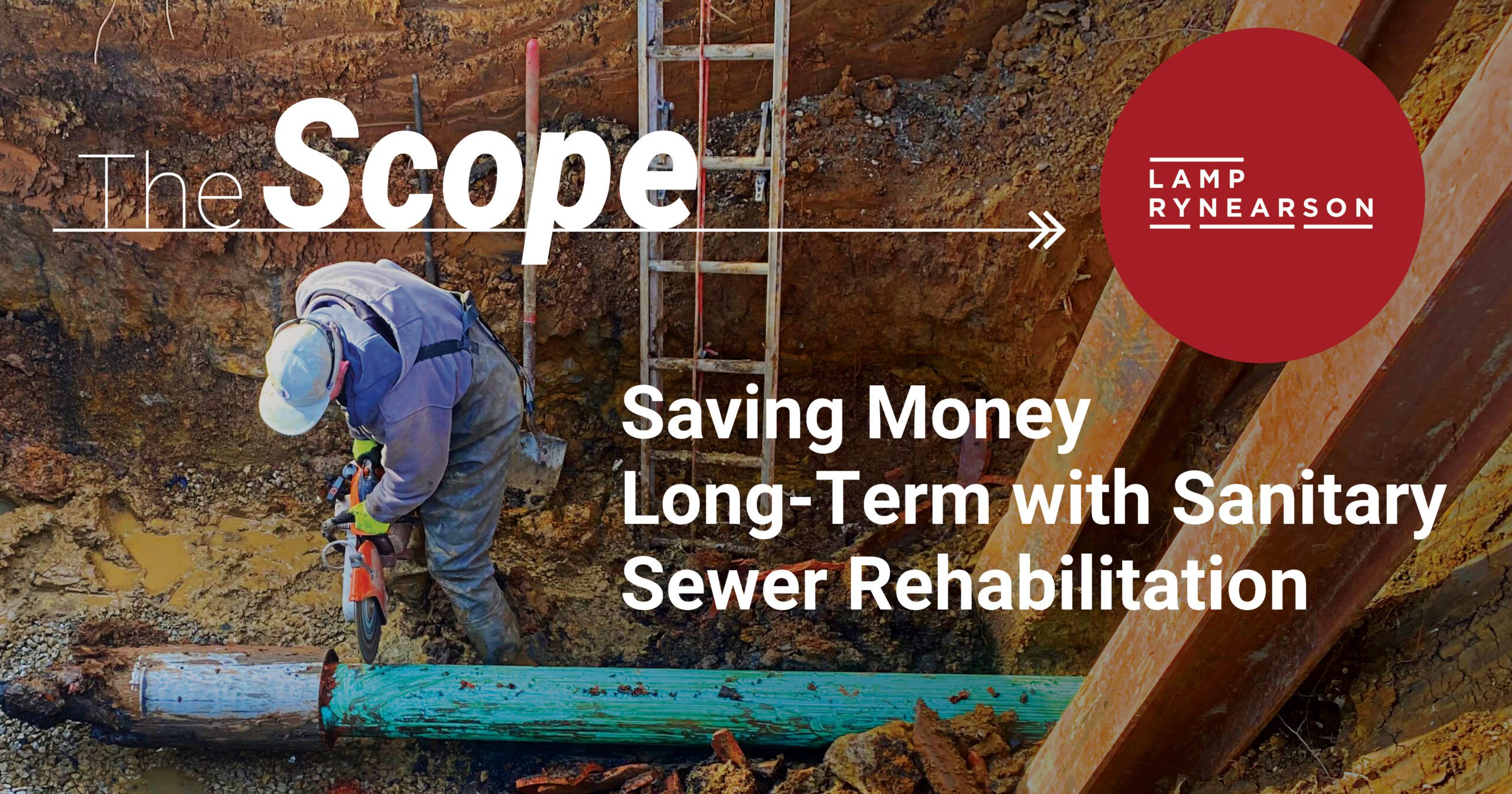
When it comes to rehabilitation, an approach of targeted repair is taken versus replacing an entire system. Sewers are analyzed using a variety of methods, such as smoke testing, closed-circuit television inspection (CCTV), manhole inspections, and flow monitoring to identify defects and pinpoint assets at risk of failure or with high levels of inflow and infiltration (I/I). Different characteristics of each pipe are taken into consideration such as defect types, size, material, age and surface conditions to determine the most cost-effective way to plan for repairs.
GIS software has the power to take current data and inform future projects based off census data, surveys, and polling. Data markers such as sales in a specific area, population density, average household income, and even health and wellness studies, allow developers, municipalities, and schools make informed decisions on expansion, location, and meeting public needs.
Extending Infrastructure Life for Our Communities
Our Wastewater experts at Lamp Rynearson have a knack for helping communities get the most out of their rehabilitation projects while saving clients money. Bringing a combined 85 years of experience to the table, we can pinpoint problem areas quickly while simultaneously delivering innovative solutions.
Completed in May 2021, our sanitary sewer rehabilitation for the City of Spring Hill, Kansas does precisely that. This was a partnership from the ground up, starting with the acquisition of significant funding through the Johnson County, Kansas Community Development Block Grant (CDBG) program. The City of Spring Hill, Kansas has used the CDBG program extensively in eligible areas of the community to rehabilitate sanitary sewers. The project started with cleaning, CCTV, and manhole inspections of an older area of the community in need of repairs. Evaluation of the field data and site trips to identify potential construction conflicts were conducted to provide clear directions to the contractors. The plans included information from site trips such as utilities, trees, landscaping, and traffic considerations.
We took care to ensure the City of Spring Hill’s sanitary sewer rehabilitation was both comprehensive and affordable, saving the City funds by using a combination of construction methods. The final project bid was under the engineer’s estimate while including:
Meet the Team
Is your community’s sanitary sewer system in need of a tune up? Get in touch with Laura and the Lamp Rynearson Wastewater team.