Lower Blue River Basin Relief Sewer Project Supports EPA Compliance and Infrastructure Resilience
Understanding the Challenge
Across the country, cities are being challenged to rethink how their infrastructure manages stormwater and wastewater—especially in aging urban areas where combined sewer systems still exist. In Kansas City, Missouri, that challenge is unfolding on a large scale.
Under a consent decree with the Environmental Protection Agency (EPA), the City of Kansas City is undertaking a series of major sewer infrastructure improvements designed to reduce sewer overflows, protect waterways, and build more resilient wastewater systems for the future.
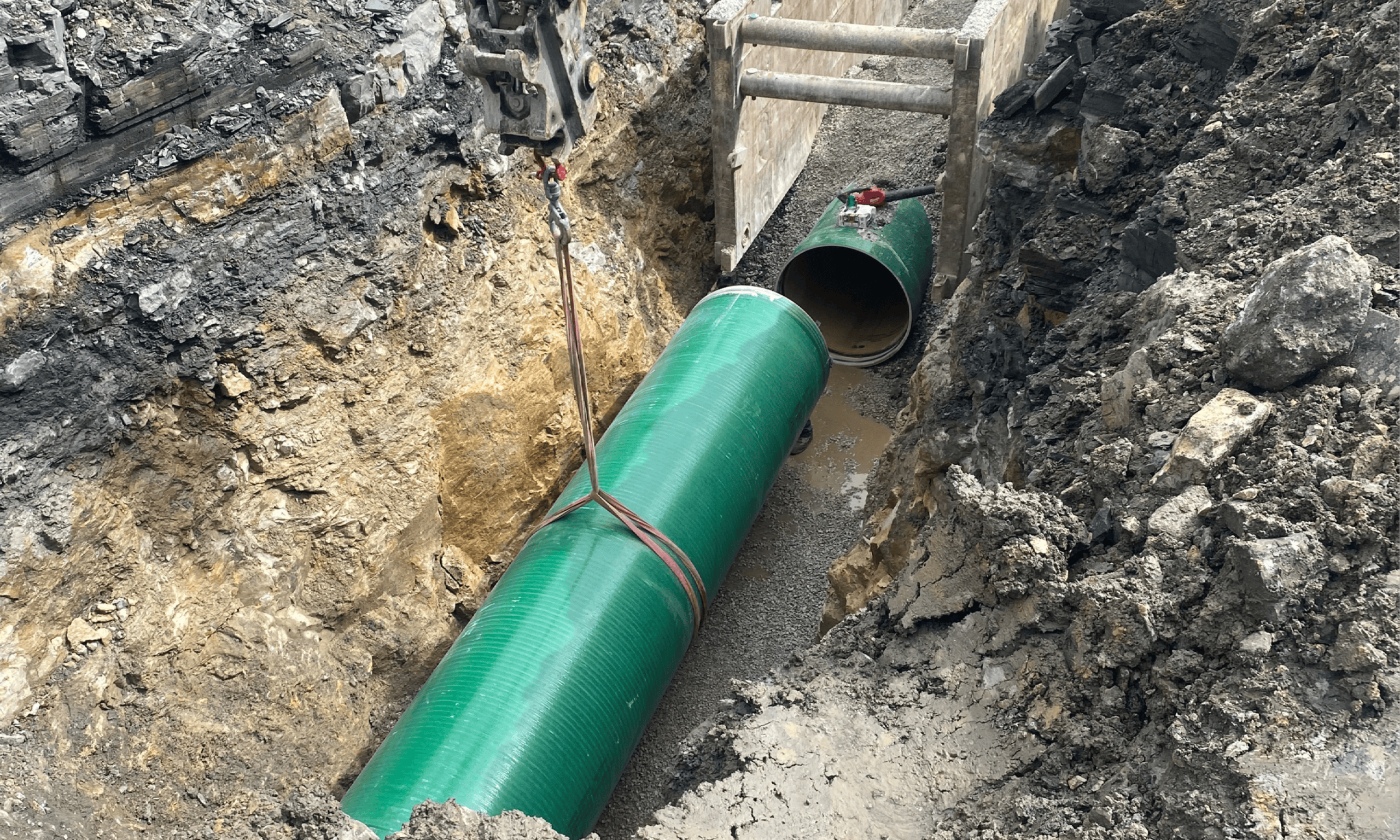
One of those recent efforts is the Lower Blue River Basin Relief Sewer; Hardesty Avenue & 31st Street Project—a multi-phase sanitary sewer improvement project our Lamp Rynearson team recently delivered to reduce excess flow entering the combined sewer system.
While the technical work behind this project is extensive, the community objective is simple: protecting people, places, and the environment through purpose-driven engineering.

A Comprehensive Look at Kansas City’s Combined Sewer System
Before any new pipe could be installed, our engineers conducted a detailed evaluation of the existing sewer infrastructure. Kansas City’s combined sewer system—a collection system where stormwater and wastewater share the same pipes—can become overwhelmed during heavy rainfall events. When this occurs, the system may overflow into nearby waterways, creating environmental and public health concerns.
To begin the project, our team performed a full condition assessment of the existing system and documented findings in a Basis of Design Memorandum. This foundational review ensured that design decisions were grounded in a clear understanding of existing capacity challenges and infrastructure deficiencies.
From there, the work evolved into a coordinated engineering design effort that included:
- Hydraulic modeling to determine how rainfall events impact flow quantity
- Appropriate sizing of new sanitary sewer pipe, ranging from 36 to 48 inches
- Review of potential conflicts with landowners, utilities, and developed commercial and industrial sites
- Design of a diversion structure and new relief sewer to meet mandated flow capacity requirements
Throughout the process, minimizing impacts to neighboring properties remained a top priority, ensuring businesses and community assets could continue operating with as little disruption as possible.
Evaluating Alternative Routes
This Kansas City sewer improvement project was not a straight-line solution. It required an extensive alternative route evaluation, exploring multiple sewer alignments before determining the most feasible and least disruptive path.
The process included preliminary study, detailed design, and construction-phase services, with each phase building upon the last to ensure the final approach met EPA requirements and long-term infrastructure performance needs.
Engineering a Path Forward
The final project includes the installation of more than 3,000 feet of relief sewer with a flow capacity of at least 64 million gallons per day (MGD). Key constructed elements include:
- A grit structure designed to allow for the removal of debris and material at the connection to the existing combined sewer system
- A north-end connection using an installed weir and rectangular box structure to divert flow to the new interceptor sewer
- A south-end connection point at the Blue River Interceptor
Together, these components create a cleaner, more resilient, and more reliable sanitary sewer system—reducing strain on Kansas City’s combined sewer infrastructure while strengthening environmental protection.
Why Sewer Infrastructure Improvements Matter
Infrastructure improvements like the Lower Blue River Basin Relief Sewer Project often happen underground, but their impact reaches far beyond it.
Projects like this:
- Protect waterways and surrounding ecosystems
- Support sustainable community growth
- Reduce environmental and public health risks
- Help Kansas City meet federal EPA consent decree requirements
- Prepare critical infrastructure systems for the future